
Managing spare parts is one of the most important responsibilities in a busy garage. A workshop may keep hundreds of items such as engine oil, filters, brake pads, spark plugs, belts, batteries, bulbs, sensors, and other repair parts. If these items are not tracked properly, the garage can face stock shortages, unnecessary purchases, misplaced products, and repair delays.
Garage Stock Management System can help workshops organize their parts and keep better control over daily inventory activities. Instead of depending only on notebooks, memory, or separate spreadsheets, garage teams can maintain important stock information in a more organized digital process.
Good stock management does not mean keeping a large amount of inventory. The goal is to keep the right parts in the right quantity and make sure employees always know what is available. In this guide, we will discuss five easy ways to control garage parts and improve your workshop operations.
Table of Contents
Why Parts Stock Management Matters in a Garage
Spare parts have a direct impact on repair work. When a required part is available, technicians can continue their work without unnecessary waiting. But when an important part is out of stock, the vehicle may remain in the workshop until the product is purchased.
Garage Stock Management System helps workshops keep useful information about available parts, quantities, purchases, and usage. This makes it easier for service advisors and managers to understand the current stock position.

Good stock control can also prevent over-purchasing. Keeping too many slow-moving products can take up storage space and lock money into inventory that may not be needed soon.
5 Easy Ways to Control Parts
1. Keep Accurate Parts Records
The first step in controlling spare parts is keeping accurate records. Every product should have clear information such as part name, part number, quantity, price, supplier, and other details that are useful for the workshop.
Garage Stock Management System can help keep these records organized in one place. Employees can search for a product instead of checking different files or asking other staff members where a part is located.
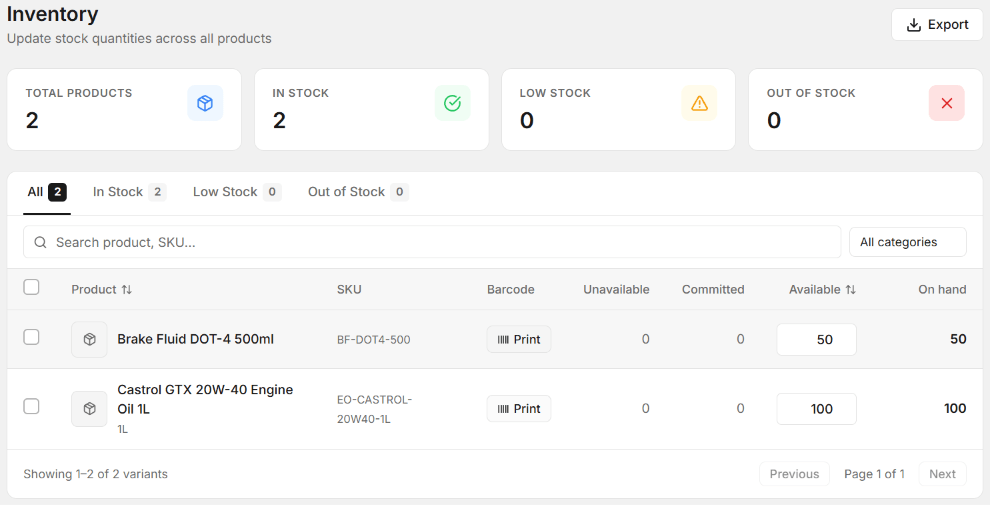
Accurate records are especially important when a garage handles many similar products. Correct part numbers can help employees select the right item and reduce mistakes during repairs.
2. Track Parts Coming In and Going Out
Parts enter and leave a garage every day. New products arrive from suppliers, while other products are used during vehicle repairs. Returns, replacements, and stock adjustments may also affect the available quantity.
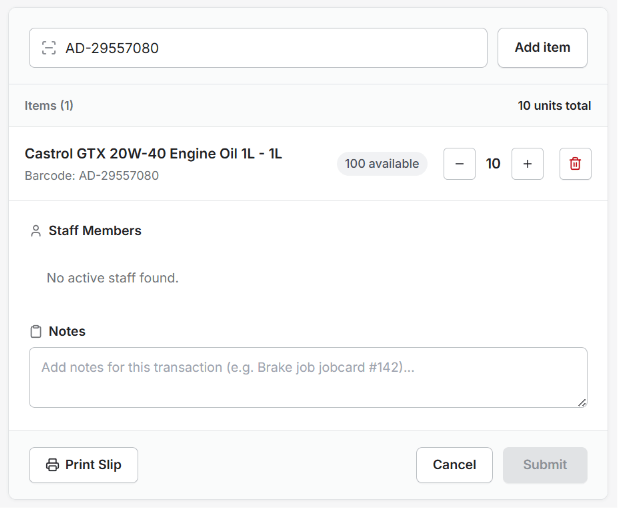
If these movements are not recorded, the stock information can quickly become inaccurate. Employees may believe that a product is available when it has already been used.
Garage Stock Management System can help the team track stock movement more consistently. Whenever parts are received or used, the information can be updated so the recorded quantity stays closer to the actual quantity.
3. Set Minimum Stock Levels
Some spare parts are used much more frequently than others. A garage may use common filters, engine oil, brake parts, bulbs, or spark plugs regularly. Running out of these products can cause avoidable delays.
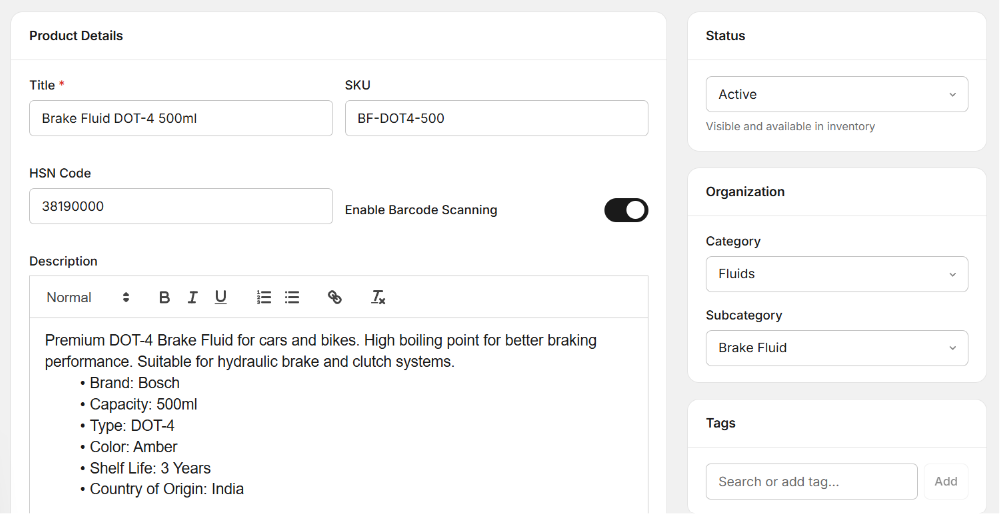
Setting a minimum stock level can help the team know when a product needs to be reordered. For example, if a commonly used item reaches a specific quantity, the purchasing team can review the requirement and place a new order.
A digital stock process makes this easier because employees can check quantities without manually counting every item each time. Garage Stock Management System can support better planning by making stock information easier to review.
4. Identify Fast-Moving and Slow-Moving Parts
Not every product in a garage moves at the same speed. Some parts may be used every day, while other products may stay on the shelf for several weeks or months.
Understanding these patterns can help garage owners make better purchasing decisions. Fast-moving products may need regular restocking, while slow-moving products should be purchased more carefully.
Reviewing stock usage can also help identify products that are taking up unnecessary storage space. Instead of purchasing the same quantity of every product, the garage can plan purchases according to actual demand.
5. Connect Parts With Repair Jobs
Spare parts are usually used because a customer vehicle needs a specific repair or service. Connecting parts with repair jobs can make it easier to understand where inventory is being used.
When a technician uses a part, the stock record should reflect that usage. This helps keep inventory information updated and can also make billing more accurate.
Garage Stock Management System can help create a better connection between inventory and workshop jobs. Service advisors can review the parts used for a vehicle and include the required items in the final invoice.
How Better Stock Control Saves Money
Poor inventory control can increase costs in several ways. A garage may purchase too many products that are rarely used, or it may run out of important parts and need to buy them urgently at a higher cost.
Better stock planning helps the business balance these two situations. By reviewing usage, quantities, and purchasing patterns, owners can decide what needs to be ordered and when.
Garage Stock Management System can provide organized inventory information that helps owners make decisions based on actual stock activity instead of guesswork.
How Parts Availability Improves Repair Speed
A vehicle cannot always be completed when a required spare part is missing. Even a simple repair can take longer if the workshop needs to wait for a product to arrive.
Keeping commonly required parts available can help technicians continue their work without unnecessary interruptions. It also allows service advisors to give customers more realistic information about repair completion.
Good inventory control therefore supports not only the parts department but also the complete workshop workflow.
Benefits of Better Garage Stock Control
- Better control over spare parts
- Faster access to product information
- Lower risk of stock shortages
- Better purchasing decisions
- Less unnecessary inventory
- Improved repair planning
- Better parts usage tracking
- More accurate billing
- Better use of storage space
These benefits can help workshops reduce daily confusion and create a more organized process for managing spare parts.
Keep Your Inventory Organized
Physical organization is just as important as digital records. Parts should have clear storage locations so employees can find products quickly. Similar products should be separated properly to reduce the chance of picking the wrong item.
Labels can also make the storage area easier to manage. Employees should know where common parts are kept and where newly received products should be placed.
When physical storage and digital records follow the same structure, employees can find parts faster and maintain more reliable stock information.
Check Your Stock Regularly
Even with digital records, physical stock checks are useful. Products can sometimes be damaged, misplaced, returned, or recorded incorrectly.
Regular checks allow the garage team to compare the physical quantity with the recorded quantity. If there is a difference, employees can investigate the reason and correct the record.
A regular checking routine can also help identify damaged or unused products before they become a larger inventory problem.
How AutoDots Can Help Modern Garages
AutoDots provides digital solutions designed to help automotive businesses organize their daily workshop operations. Modern tools can help teams manage customer information, vehicle services, job cards, appointments, billing, and other important activities.
Garage Stock Management System can be useful for workshops that want to reduce manual inventory work and create a more organized way to manage spare parts and stock information.
Businesses interested in automotive technology and partnership opportunities can explore the AutoDots partner program to learn more.
For more automotive business guides, workshop tips, and useful technology information, visit the AutoDots blog.
Simple Tips to Improve Parts Management
Start by reviewing your current inventory. Identify which parts are used regularly, which products are rarely used, and which items frequently go out of stock.
Next, make sure product names and part numbers are consistent. Duplicate or unclear product records can make stock management difficult.
Train employees to update inventory whenever products are received, used, returned, or adjusted. Consistent updates are important because even a good system will not provide useful information if employees do not maintain the records.
It is also useful to review stock reports regularly. A simple review can show where money is being spent and which products need more attention.
Common Stock Management Problems to Avoid
One common problem is relying completely on memory. Employees may remember where popular parts are stored, but this becomes difficult when the inventory grows.
Another problem is purchasing products without checking current stock. This can create unnecessary overstock and reduce available storage space.
Garages should also avoid waiting until a part is completely finished before thinking about reordering. Important fast-moving items should be monitored so that new stock can be arranged before a shortage affects repairs.
Finally, avoid keeping inventory information in multiple disconnected places. A clear and organized process makes it easier for the entire team to work with the same information.
Frequently Asked Questions
What is a garage stock management system?
A garage stock management system is a digital solution that helps workshops manage spare parts, stock quantities, product information, purchases, usage, and inventory records.
How can Garage Stock Management System help a workshop?
Garage Stock Management System can help workshops organize parts records, track stock movement, monitor quantities, reduce shortages, and make better purchasing decisions.
Can small garages use a stock management system?
Yes. Small garages can use digital stock management tools to reduce manual records, organize spare parts, and understand their inventory more clearly.
Why should parts be connected with repair jobs?
Connecting parts with repair jobs helps the garage understand which products were used for a particular vehicle. It can also make billing and inventory updates easier.
How can a garage reduce overstock?
A garage can reduce overstock by reviewing product usage, identifying slow-moving items, setting suitable stock levels, and purchasing products according to actual workshop demand.
Conclusion
Controlling spare parts properly is an important part of running an efficient garage. Without accurate inventory information, workshops can face stock shortages, unnecessary purchases, repair delays, and storage problems.
Garage Stock Management System provides a practical way to organize parts records, track stock movement, set minimum levels, understand product usage, and connect inventory with repair jobs.
By following simple stock management practices and using suitable digital tools, garages can save time, reduce unnecessary costs, improve repair planning, and provide better service to customers. The main goal is simple: keep the right parts available, know where they are, and make sure every stock movement is recorded properly.