
Garage Performance Metrics are essential for understanding how well a workshop is operating, where profits are coming from, and which areas need improvement. However, many garage owners focus only on daily workload and monthly revenue while overlooking key performance indicators (KPIs) that can significantly impact long-term growth.
In 2026, successful workshops are increasingly using data-driven decision-making to improve efficiency, customer retention, profitability, and technician productivity. Tracking the right Garage Performance Metrics helps owners identify opportunities, solve problems faster, and make smarter business decisions.
This guide covers six critical KPIs every garage owner should track and explains why many workshops miss these valuable insights.
Table of Contents
Why Garage Performance Metrics Matter
Without measurable data, it can be difficult to determine whether your workshop is improving or falling behind competitors.
Garage Performance Metrics provide visibility into daily operations, customer behavior, financial performance, and staff productivity. Instead of relying on assumptions, garage owners can use accurate information to guide decisions.
Businesses that monitor performance regularly are often better positioned for sustainable growth.
KPI 1: Average Repair Order Value (ARO)
One of the most important Garage Performance Metrics is Average Repair Order Value, commonly known as ARO.
This KPI measures the average revenue generated from each customer visit. Tracking ARO helps garages understand whether they are maximizing opportunities during service appointments.
A rising ARO often indicates stronger service recommendations, improved customer trust, and higher-value work being completed.
How to Improve Average Repair Order Value
- Perform comprehensive vehicle inspections.
- Recommend preventative maintenance services.
- Improve customer communication.
- Provide transparent repair explanations.
- Offer service packages when appropriate.
Small improvements in ARO can significantly impact overall profitability.
KPI 2: Technician Productivity
Technician productivity is another critical area among Garage Performance Metrics.
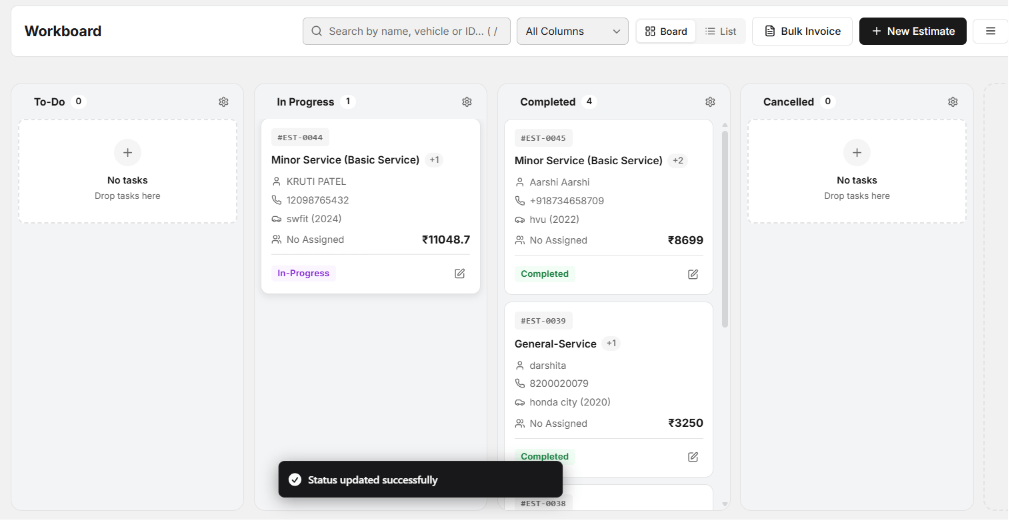
This KPI measures how effectively technicians use their available working hours. Low productivity can result from workflow bottlenecks, unclear job assignments, parts delays, or administrative inefficiencies.
Improving technician productivity often increases workshop capacity without hiring additional staff.
Common Productivity Challenges
- Waiting for parts.
- Poor job scheduling.
- Incomplete repair information.
- Communication delays.
- Paper-based processes.
- Workshop congestion.
Identifying productivity obstacles helps workshops improve efficiency.
KPI 3: Customer Retention Rate
Customer retention is one of the most overlooked Garage Performance Metrics.
Many workshops focus heavily on acquiring new customers but fail to track how many existing customers return for future services.
Retained customers often generate higher lifetime value and contribute to word-of-mouth referrals.
Why Retention Matters
Acquiring new customers is typically more expensive than retaining existing ones.
A strong retention rate often reflects customer satisfaction, trust, and consistent service quality.
Workshops with high retention rates generally experience more stable revenue.
KPI 4: Workshop Utilization Rate
Workshop utilization measures how effectively available resources are being used.
Among Garage Performance Metrics, utilization helps owners understand whether technicians, equipment, and service bays are operating efficiently.
Low utilization may indicate scheduling problems or insufficient booking volume, while excessive utilization can lead to delays and reduced service quality.
Benefits of Monitoring Utilization
- Improves scheduling decisions.
- Reduces idle time.
- Increases operational efficiency.
- Supports capacity planning.
- Improves profitability.
Balanced utilization helps workshops operate more effectively.
KPI 5: Customer Satisfaction Score
Customer satisfaction is increasingly important in today’s competitive market.
Garage Performance Metrics should include customer feedback because positive experiences directly influence retention, referrals, and online reviews.
Tracking satisfaction levels helps identify areas where service improvements may be needed.
Ways to Measure Satisfaction
- Customer surveys.
- Online reviews.
- Follow-up calls.
- Feedback forms.
- Net Promoter Score (NPS).
Regular feedback provides valuable insights into customer expectations.
KPI 6: Booking Conversion Rate
The final KPI among essential Garage Performance Metrics is booking conversion rate.
This metric measures how many inquiries, calls, website visits, or appointment requests become confirmed bookings.
A low conversion rate may indicate issues with communication, pricing, customer experience, or booking convenience.
How to Improve Booking Conversions
- Offer online appointment scheduling.
- Respond quickly to inquiries.
- Improve review ratings.
- Provide clear pricing information.
- Enhance customer communication.
Improving conversion rates helps maximize marketing and visibility efforts.
How Autodots Helps Track Garage Performance Metrics
Autodots provides workshop owners with powerful tools for monitoring Garage Performance Metrics through a centralized digital platform.
The system includes digital job cards, appointment scheduling, workflow tracking, customer management, invoicing, and automated service reminders.
By digitizing operations, garage owners gain greater visibility into technician productivity, booking performance, customer retention, and workshop efficiency.
Autodots also supports SMS campaigns, email marketing, and WhatsApp communication, helping workshops improve customer engagement and retention.
Common Mistakes Garage Owners Make
- Tracking revenue only.
- Ignoring customer retention.
- Not measuring technician productivity.
- Failing to review operational data regularly.
- Using manual reporting processes.
- Overlooking customer satisfaction trends.
- Ignoring booking conversion rates.
- Making decisions without reliable data.
Avoiding these mistakes can help workshops achieve stronger business performance.
Why Data-Driven Garages Grow Faster
Successful workshops increasingly rely on Garage Performance Metrics to guide strategic decisions.
By monitoring KPIs consistently, owners can identify growth opportunities, improve efficiency, reduce costs, and strengthen customer relationships.
Data-driven businesses are often more adaptable and competitive.
Increase Your Workshop Visibility
Garages looking to attract more customers can join the Autodots Partner Program. Listing your workshop helps increase visibility and allows vehicle owners to discover trusted service providers in their area.
Greater visibility combined with strong operational performance can support long-term business growth.
Learn More About Workshop Management
For additional workshop management insights, customer retention strategies, and garage growth tips, visit the Autodots Blog.
Build a Stronger Garage Business
Tracking performance is not just about collecting numbers. It is about understanding what drives success and using that information to improve results.
Workshops that monitor key metrics consistently can make better decisions, improve customer experiences, and increase profitability over time.
Frequently Asked Questions
What are garage performance metrics?
Garage performance metrics are measurable indicators that help workshop owners evaluate operational efficiency, profitability, customer satisfaction, and business growth.
Which KPI is most important for garages?
There is no single KPI that matters most. Average repair order value, customer retention, productivity, and utilization all provide valuable insights.
How often should garages review KPIs?
Most workshops benefit from reviewing key metrics weekly or monthly to identify trends and opportunities.
Can software help track garage performance?
Yes. Modern workshop management platforms provide dashboards and reporting tools that simplify KPI tracking.
Why do many garages fail to track performance metrics?
Many workshops rely on manual processes or focus only on revenue, missing valuable operational insights that drive growth.
Conclusion
Garage Performance Metrics provide garage owners with the information needed to improve profitability, efficiency, customer satisfaction, and long-term growth. By tracking Average Repair Order Value, Technician Productivity, Customer Retention Rate, Workshop Utilization, Customer Satisfaction, and Booking Conversion Rate, workshops can gain a clearer understanding of business performance. In 2026, garages that embrace data-driven decision-making will be better positioned to compete, grow, and deliver exceptional customer experiences.