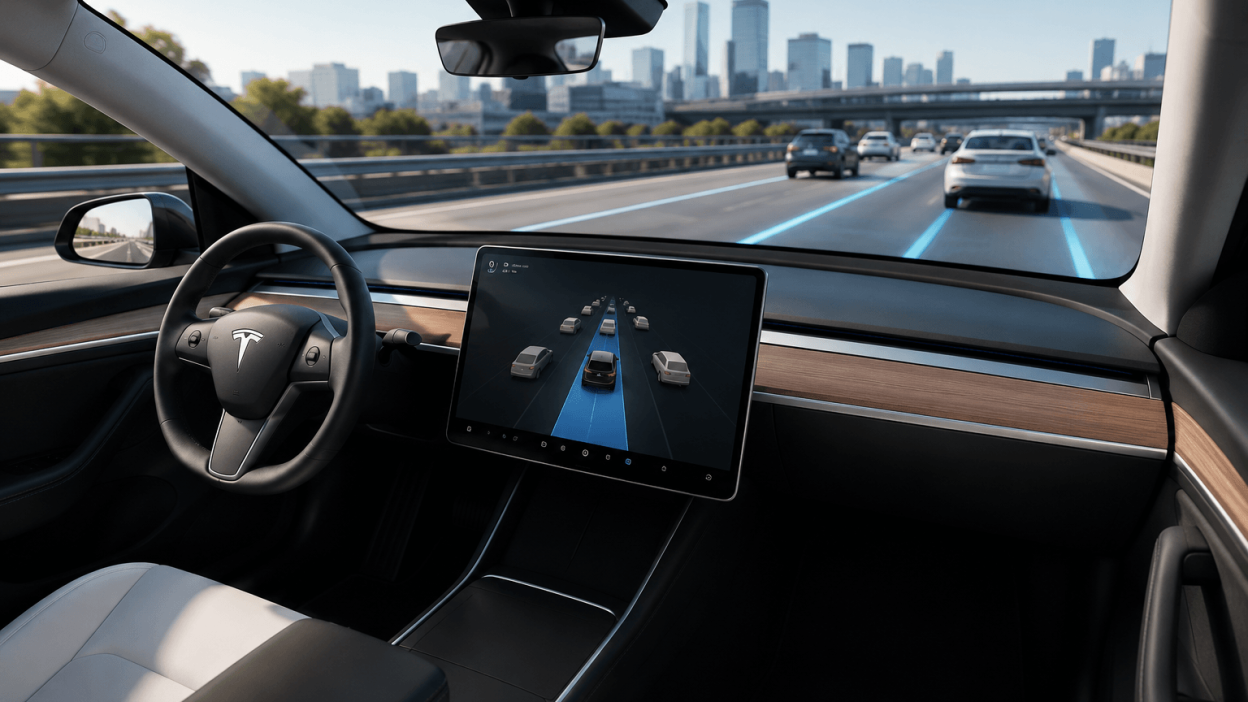
Tesla Autopilot Features have transformed the way many people think about driving assistance. Tesla’s advanced driver-assistance system combines cameras, sensors, artificial intelligence, and powerful onboard computing to help drivers steer, accelerate, brake, and maintain a safe distance from other vehicles. While Autopilot makes driving more convenient, Tesla emphasizes that it is a driver-assistance system—not a fully autonomous driving solution—and drivers must remain attentive and ready to take control at all times.
Over the years, Tesla has continuously improved its software through over-the-air (OTA) updates, introducing smarter safety technologies and new driving capabilities. Whether you’re planning to buy a Tesla or simply want to understand how the system works, this guide covers the most important Tesla Autopilot Features, including available packages, safety technologies, and what drivers can realistically expect.
Table of Contents
Tesla Autopilot at a Glance
| Category | Details |
|---|---|
| Technology | Advanced Driver Assistance System (ADAS) |
| Standard Functions | Traffic-Aware Cruise Control & Autosteer |
| Optional Packages | Enhanced Autopilot & Full Self-Driving (Supervised) |
| Updates | Over-the-Air Software Updates |
| Driver Attention | Required at All Times |
What Is Tesla Autopilot?
Tesla Autopilot Features are designed to reduce driver workload by assisting with steering, acceleration, braking, and maintaining lane position. Unlike traditional cruise control systems, Autopilot constantly monitors surrounding traffic and adjusts vehicle behavior in real time using cameras and onboard artificial intelligence.
It’s important to understand that Autopilot does not replace the driver. The driver must keep their hands on the steering wheel when required, monitor traffic conditions, and be prepared to intervene whenever necessary.
1. Traffic-Aware Cruise Control
One of the most widely used Tesla Autopilot Features is Traffic-Aware Cruise Control (TACC). Instead of maintaining only a fixed speed, the system automatically adjusts the vehicle’s speed based on surrounding traffic.
Key benefits include:
- Maintains a preset cruising speed.
- Automatically slows down when traffic builds.
- Accelerates when the road clears.
- Helps reduce driver fatigue on highways.
2. Autosteer
Autosteer helps keep the vehicle centered within clearly marked lanes while driving on compatible roads. Working together with Traffic-Aware Cruise Control, this feature assists during long highway journeys and stop-and-go traffic.
Among the most recognized Tesla Autopilot Features, Autosteer improves driving comfort but still requires continuous driver supervision.
3. Automatic Emergency Braking
Tesla vehicles are equipped with Automatic Emergency Braking, a safety system that can detect potential collisions and apply the brakes if the driver does not react in time.
This feature is designed to help reduce the severity of certain frontal collisions and improve overall road safety.
4. Lane Departure Avoidance
Another important addition to the Tesla Autopilot Features suite is Lane Departure Avoidance.
The system can:
- Warn drivers when drifting from the lane.
- Provide steering assistance.
- Help return the vehicle to its lane.
- Reduce accidental lane departures.
This technology is especially useful during long-distance driving when driver fatigue may become a factor.
5. Blind Spot Safety
Tesla continuously monitors nearby vehicles and alerts drivers when another vehicle occupies the blind spot during a lane change.
The system combines camera views, visual warnings, and intelligent monitoring to improve safety during overtaking and merging.
Enhanced Autopilot Features
Beyond the standard system, Tesla offers Enhanced Autopilot in supported markets. These additional Tesla Autopilot Features expand highway driving convenience by adding more automation while still requiring full driver attention.
| Feature | Purpose |
|---|---|
| Navigate on Autopilot | Guides highway driving and interchanges |
| Auto Lane Change | Changes lanes after driver confirmation |
| Autopark | Assists with parallel and perpendicular parking |
| Smart Summon | Moves the vehicle in parking areas (where available) |
Full Self-Driving (Supervised)
Tesla also offers Full Self-Driving (Supervised) in selected regions. Despite its name, the driver must remain fully attentive and ready to take control immediately.
Depending on market availability and regulatory approval, the system may assist with city streets, traffic lights, stop signs, roundabouts, and more complex driving situations. However, these capabilities continue to evolve through software updates and are subject to regional regulations.
Hardware Behind Tesla Autopilot
The performance of Tesla Autopilot Features depends on Tesla’s advanced hardware and software ecosystem. Modern Tesla vehicles use multiple exterior cameras, ultrasonic sensors on older models, and a high-performance onboard computer capable of processing massive amounts of real-time driving data.
Tesla’s AI software continuously analyzes road markings, nearby vehicles, pedestrians, traffic signs, and obstacles to support driver-assistance functions. Regular over-the-air updates also allow Tesla to improve system performance without requiring owners to visit a service center.
Over-the-Air Software Updates
One advantage of owning a Tesla is the ability to receive software improvements remotely. Many Tesla Autopilot Features have become more capable over time through OTA updates, adding refinements, bug fixes, safety improvements, and new functionality.
This approach helps Tesla keep its vehicles current even years after purchase, giving owners access to ongoing improvements without replacing hardware in many cases.
Understanding the Limitations
Although Tesla Autopilot Features are among the most advanced driver-assistance technologies available, they are not designed to make the vehicle fully autonomous.
Drivers should remember:
- Always keep your attention on the road.
- Be prepared to steer or brake at any moment.
- Autopilot performance depends on road markings and weather conditions.
- Heavy rain, snow, fog, or poor visibility may reduce system effectiveness.
- Some features vary by country due to local regulations.
Tesla recommends using the system responsibly and following all traffic laws while driving.
Autopilot vs Enhanced Autopilot vs Full Self-Driving
| Package | Main Capabilities |
|---|---|
| Autopilot | Traffic-Aware Cruise Control, Autosteer |
| Enhanced Autopilot | Navigate on Autopilot, Auto Lane Change, Autopark, Smart Summon |
| Full Self-Driving (Supervised) | Expanded driver assistance on highways and selected city roads (where available) |
Understanding these packages helps buyers choose the configuration that best matches their driving needs and local availability.
How Tesla Compares with Other Driver-Assistance Systems
Many automakers now offer advanced driver-assistance technologies, but Tesla remains one of the most recognized names in this segment. Competitors include:
- Mercedes-Benz Drive Pilot
- Ford BlueCruise
- General Motors Super Cruise
- BMW Driving Assistant Professional
- Nissan ProPILOT Assist
- Hyundai Highway Driving Assist
Each system has different capabilities, supported roads, and regional availability, making it important for buyers to compare features before making a purchase.
Own an EV Workshop? Grow with Autodots
As advanced electric vehicles become more common, repair workshops need smarter tools to manage customers and daily operations efficiently.
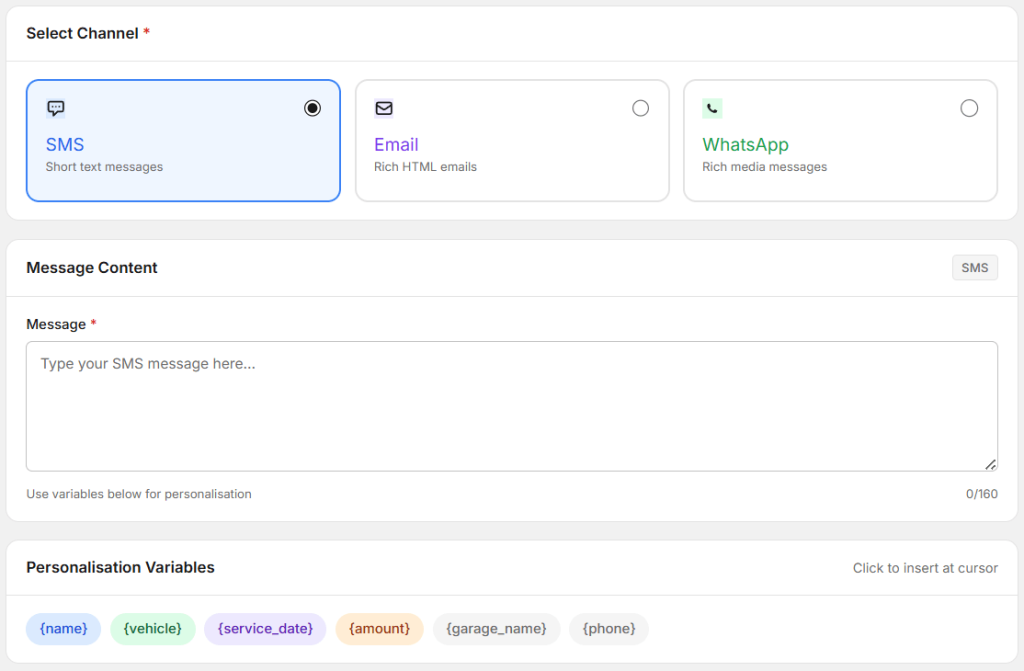
Through the Autodots Partner Program, your workshop receives a verified business profile, online appointment booking, customer reviews, and greater visibility on the Autodots marketplace. Autodots also provides Digital Job Cards, workflow management, technician assignment, inventory management, invoicing, payment tracking, and automated WhatsApp, SMS, and email communication to help your business grow while delivering a better customer experience.
Frequently Asked Questions
What are Tesla Autopilot Features?
Tesla Autopilot Features include Traffic-Aware Cruise Control, Autosteer, lane assistance, Automatic Emergency Braking, and additional driver-assistance technologies designed to make driving safer and more convenient.
Is Tesla Autopilot fully self-driving?
No. Tesla Autopilot is a driver-assistance system. Drivers must remain attentive, monitor the road, and be ready to take control at all times.
Can Tesla Autopilot change lanes automatically?
Auto Lane Change is available with Enhanced Autopilot or Full Self-Driving (Supervised) in supported regions and requires driver supervision.
Does Tesla improve Autopilot after purchase?
Yes. Tesla frequently delivers software improvements through over-the-air updates that enhance functionality, safety, and overall performance.
Are Tesla Autopilot Features worth it?
For drivers who frequently travel on highways or in heavy traffic, Tesla Autopilot Features can improve comfort, reduce fatigue, and enhance safety when used responsibly alongside active driver supervision.
Conclusion
Tesla Autopilot Features continue to set the benchmark for advanced driver-assistance technology by combining intelligent software, AI-powered perception, and regular over-the-air updates. From adaptive cruise control and Autosteer to advanced safety systems and optional Enhanced Autopilot capabilities, Tesla offers one of the most comprehensive ADAS experiences available today. While the technology is highly capable, it is designed to assist—not replace—the driver. Understanding its capabilities and limitations will help owners use the system safely while enjoying a more comfortable and connected driving experience.
For additional workshop technology insights and automotive industry updates, visit the Autodots Blog.