
Managing spare parts is one of the most important tasks in a busy garage. A workshop may have hundreds of parts, different suppliers, regular purchases, and parts being used across multiple repair jobs. When stock is tracked manually, it can become difficult to know what is available, what has been used, and what needs to be ordered.
Garage Software with Inventory Tracking can help workshops organize their parts information and keep better control over stock. Instead of depending only on notebooks, spreadsheets, or memory, the team can maintain digital records of parts, quantities, purchases, usage, and stock movement.
Better inventory control can reduce unnecessary purchases, prevent stock shortages, and make the repair process smoother. In this guide, we will discuss seven easy ways to control garage parts and improve workshop efficiency.
Table of Contents
Why Parts Inventory Matters in a Garage
A vehicle repair can depend on having the right part available at the right time. If an important part is out of stock, the repair may be delayed and the customer may have to wait longer for vehicle delivery.
On the other hand, keeping too many slow-moving parts can block money and storage space. This is why garages need a balanced approach to inventory management.
Garage Software with Inventory Tracking can help the team understand stock levels and parts movement. With better records, managers can make more informed decisions about purchasing and storage.

7 Easy Ways to Control Garage Parts
1. Keep Every Part in a Digital Record
The first step toward better inventory control is creating an organized record for every important part. The record can include part name, part number, supplier, purchase price, selling price, current quantity, and other useful details.
A digital record makes it easier to search for a part when a technician or service advisor needs it. Employees do not have to search through shelves or paper records just to find basic product information.

Garage Software with Inventory Tracking can help keep these details in one place and make parts information easier to access during daily workshop operations.
2. Set Minimum Stock Levels
Not every part needs to be kept in large quantities. Some products are used regularly, while others may be required only occasionally.
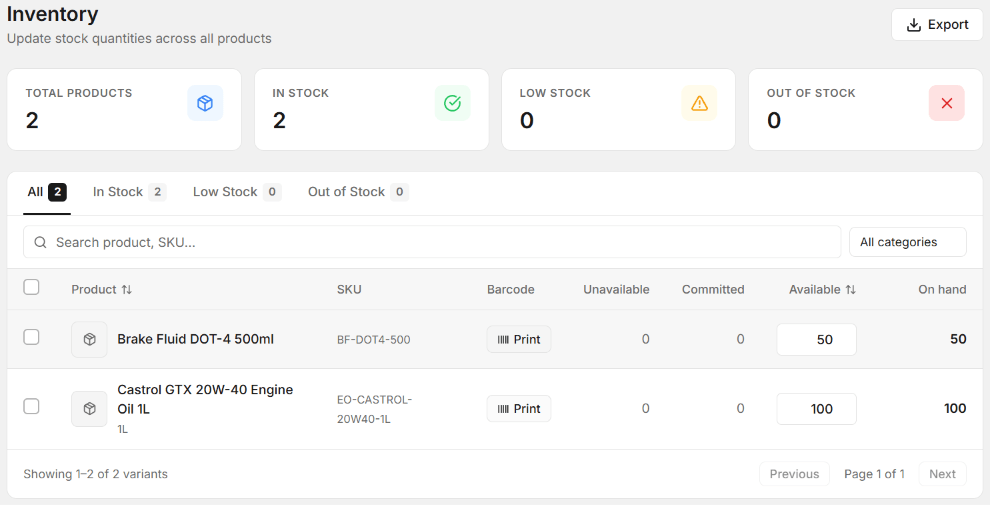
Set a minimum stock level for important and frequently used parts. When the quantity reaches that level, the purchasing team can review whether another order should be placed.
This simple approach can reduce the chance of running out of commonly used parts and help the workshop avoid unnecessary emergency purchases.
3. Track Parts Used on Every Job
Whenever a spare part is used for a vehicle repair, the stock record should be updated. If parts are removed from inventory but the system is not updated, the recorded quantity will quickly become inaccurate.
Parts should be connected with the appropriate job card whenever possible. This allows the team to understand which parts were used for a particular vehicle and repair.
With Garage Software with Inventory Tracking, parts usage can become part of the normal repair workflow instead of being treated as a separate manual task.
4. Record New Stock When It Arrives
Inventory control is not only about tracking parts going out. New parts coming into the garage should also be recorded properly.
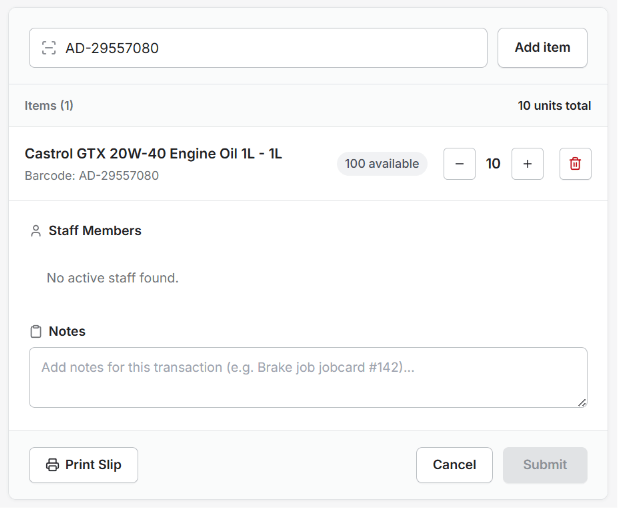
When a supplier delivers an order, check the quantity and product information before updating the stock. If the delivered quantity is different from the purchase order, correct the record immediately.
Keeping incoming stock updated helps the team know what is actually available and reduces confusion when technicians search for parts.
5. Organize Parts by Category
Finding parts becomes easier when the inventory is organized into clear categories. Depending on the garage, categories may include filters, brakes, engine parts, electrical components, suspension parts, tyres, batteries, fluids, and accessories.
You can also use shelves, bins, labels, and part numbers to make physical storage easier to manage.
A digital inventory system can support the same structure by allowing employees to search and filter parts quickly. This is especially useful when the garage has a large number of products.

6. Check Slow-Moving and Fast-Moving Parts
Not every part moves at the same speed. Some products may be used every week, while others may remain in storage for months.
Review parts usage regularly to identify fast-moving and slow-moving products. Frequently used parts may need higher stock levels, while slow-moving items should be reviewed before placing new orders.
Garage Software with Inventory Tracking can help managers review stock information and make better purchasing decisions based on actual usage rather than guesswork.
7. Review Inventory Regularly
Even when digital records are used, physical stock should be checked regularly. Parts can sometimes be damaged, misplaced, returned, or recorded incorrectly.
Compare physical quantities with digital records and correct differences when necessary. Regular checks help maintain accurate inventory information.
A small weekly or monthly inventory review can prevent small errors from becoming larger stock problems.
How Inventory Tracking Saves Workshop Time
Searching for parts can waste valuable workshop time. Employees may need to check different shelves, ask other team members, or search through old purchase records.
A digital inventory system can make product information easier to find. Employees can search by part name, part number, category, or other available details.
This can help technicians and service advisors quickly determine whether a required part is available before repair work begins.
Reduce Stock-Out Problems
A stock-out happens when a required part is not available when it is needed. This can delay a repair and may require the workshop to place an urgent order.
Better inventory tracking helps managers identify low-stock items earlier. Instead of discovering the problem when a technician needs the part, the team can review stock levels and plan purchases in advance.
This can make the repair process more predictable and help reduce unnecessary customer waiting time.
Avoid Overstocking
Keeping too many parts can also create problems. Overstock ties up money, takes up storage space, and increases the possibility that some products will remain unused for a long time.
Review actual usage before ordering large quantities. If a part is rarely used, it may not make sense to keep a large supply unless there is a specific reason.
Garage Software with Inventory Tracking can help workshops review stock information and make purchasing decisions based on real usage patterns.
Connect Inventory With Job Cards
Job cards contain important information about repair work. When parts used during a job are recorded on the same job card, the workshop can maintain a clearer connection between the repair and inventory movement.
This makes it easier to understand which parts were used, which customer was billed, and how stock changed after the repair.
A connected workflow also reduces repeated data entry because employees do not need to record the same part information separately in multiple systems.
Connect Inventory With Billing
Parts used during a repair usually need to appear on the customer’s invoice. If the inventory and billing processes are disconnected, employees may have to enter the same part information again.
Connecting the two processes can make billing faster and reduce the possibility of missing parts from an invoice.
When a part is selected for a job, the service team can review its quantity and price before creating the final invoice. This creates a more organized process from stock usage to customer billing.
Benefits of Better Parts Control
- Better visibility of available stock
- Fewer stock-out situations
- Reduced unnecessary purchases
- Faster parts searching
- Better purchasing decisions
- Improved job card accuracy
- More accurate customer invoices
- Less manual record keeping
- Better storage organization
- Improved workshop efficiency
These benefits can help garages control their inventory while making everyday repair work easier for technicians and service advisors.
How to Organize a Garage Parts Store
Good digital records work best when physical storage is also organized. Use clear labels for shelves, bins, and categories so employees can quickly find the required product.
Frequently used parts should be easy to access. Similar products should be separated clearly to reduce the chance of picking the wrong item.
If possible, use part numbers consistently across purchase records, inventory records, job cards, and invoices. This makes searching and identification easier.
How AutoDots Can Help Garages
AutoDots provides digital solutions designed to help automotive businesses organize their daily workshop operations. Modern workshop tools can help teams manage customer information, vehicle records, appointments, job cards, inspections, inventory, billing, and other important processes.
Garage Software with Inventory Tracking can be useful for workshops that want to reduce manual stock work and create a more connected process between parts, repairs, and billing.
Businesses interested in automotive technology and partnership opportunities can explore the AutoDots partner program to learn more.
For more automotive business guides, workshop tips, and useful industry information, visit the AutoDots blog.
Simple Tips to Improve Parts Management
Start by cleaning your existing inventory records. Remove duplicate product entries, update incorrect quantities, and make sure important parts have clear names or part numbers.
Next, identify the parts that are used most often. These products should receive closer attention because running out of them can directly affect daily repairs.
Train employees to update stock whenever parts are received, returned, damaged, or used. Consistent data entry is important for keeping inventory information accurate.
Finally, review your inventory regularly. A short review can help identify stock problems before they affect customer service.
Common Inventory Mistakes to Avoid
One common mistake is relying only on memory to know which parts are available. This may work when inventory is very small, but it becomes unreliable as the garage grows.
Another mistake is failing to update stock after a part is used. This can make digital quantities different from the actual stock on the shelf.
Garages should also avoid buying large quantities simply because a supplier offers a discount. If the parts are rarely used, the money may remain tied up in unnecessary inventory.
Finally, do not ignore damaged or returned parts. These changes should also be recorded so the available stock remains accurate.
Frequently Asked Questions
What is Garage Software with Inventory Tracking?
Garage Software with Inventory Tracking is a digital solution that helps workshops manage spare parts, stock quantities, purchases, usage, inventory movement, and related repair information.
How can inventory software help a garage?
Inventory software can help garages know which parts are available, identify low-stock products, track parts used on jobs, reduce manual records, and make purchasing decisions easier.
Can inventory tracking reduce stock shortages?
Yes. By monitoring stock levels and setting minimum quantities for important parts, garages can identify low-stock items earlier and plan purchases before the parts run out.
Can inventory be connected with job cards?
Yes. Connecting inventory with job cards can help record which parts were used for each repair and provide a clearer connection between the vehicle service and stock movement.
Why should garages avoid overstocking?
Overstocking can block money, use valuable storage space, and leave slow-moving parts unused for long periods. Reviewing actual parts usage can help garages maintain more balanced inventory levels.
Conclusion
Parts inventory has a direct effect on workshop efficiency. If the right part is unavailable, a repair can be delayed. If too many parts are purchased, money and storage space can be wasted.
Garage Software with Inventory Tracking provides a practical way to organize parts records, monitor stock, connect parts with job cards, support billing, and improve purchasing decisions. It can reduce manual work while giving the workshop better visibility into its inventory.
The goal is simple: know what you have, know what you use, and know what you need to order. With organized inventory records and a consistent process, garages can reduce stock problems, improve repair efficiency, and provide a smoother experience for both employees and customers.