Your car tyres are the only part of your vehicle that touches the road. Yet most car owners ignore them completely — until a tyre bursts at highway speed or the car skids on a wet road. Tyres are not just rubber — they are your car’s most critical safety component.
This Best Car Tyres Guide gives you 6 powerful tips to choose the right tyres, maintain them properly, and drive safely all year round in Indian road conditions.
Table of Contents
Best Car Tyres Guide Most Important Safety Component
Every time you brake, accelerate, or take a turn — it’s your tyres doing the work. Worn, underinflated, or wrong tyres can cause:
- Increased braking distance — up to 40% longer on wet roads
- Loss of control during sudden turns
- Tyre blowouts at high speed — one of the most dangerous situations on Indian highways
- Poor fuel efficiency — up to 5–8% more fuel consumption
- Uneven wear leading to frequent replacements
Understanding tyres is not optional — it’s essential for every car owner’s safety.
6 Powerful Car Tyre Tips for Safe Driving
1. Choose the Right Tyre Size for Your Car
The most fundamental part of any Best Car Tyres Guide — never fit tyres that are not recommended for your car. Every car has a specific tyre size designed for its weight, suspension, and performance.
How to read tyre size — Example: 185/65 R15 88H
| Number | What It Means |
|---|---|
| 185 | Tyre width in mm |
| 65 | Aspect ratio (sidewall height %) |
| R15 | Rim diameter in inches |
| 88H | Load index and speed rating |
2. Check Tyre Pressure Every Week
Tyre pressure is the single most ignored aspect of car tyre maintenance — and the most impactful. Wrong pressure affects safety, fuel efficiency, and tyre life dramatically.
Effects of wrong tyre pressure:
| Condition | Effect |
|---|---|
| Underinflated | Poor handling, overheating, blowout risk |
| Overinflated | Less grip, harsh ride, centre wear |
| Correct pressure | Safe handling, better fuel economy, longer tyre life |
Tips for checking tyre pressure:
- Check pressure when tyres are cold — before driving
- Use a reliable digital tyre pressure gauge
- Check all 4 tyres plus the spare tyre
- Follow manufacturer recommended PSI — usually 30–35 PSI for most Indian cars
- Check more frequently in summer — heat increases pressure
3. Know When to Replace Your Tyres
Most Indian car owners drive on tyres long past their safe lifespan.Best Car Tyres Guide. This is one of the most dangerous habits on the road.
Replace your tyres when:
- Tread depth falls below 2mm — use a coin test to check
- Tyres are older than 5 years — rubber degrades even if unused
- You see cracks, bulges, or cuts on the sidewall
- Uneven wear — flat centre or worn edges
- Car vibrates or pulls to one side while driving
- After any significant impact or pothole hit
4. Rotate Your Tyres Every 10,000 km
Tyre rotation is one of the most overlooked car tyre tips — yet it extends tyre life by up to 30% and ensures even wear across all four tyres.
Why rotation matters:
- Front tyres wear faster due to steering and braking forces
- Without rotation, front tyres need replacement while rear tyres are still good
- Regular rotation saves you from replacing just 2 tyres — making all 4 last equally long
Standard rotation patterns:
- Front-wheel drive — rear to front, cross front to rear
- Rear-wheel drive — front to rear, cross rear to front
- All-wheel drive — full cross rotation every 10,000 km
Ask your Autodots garage to include tyre rotation in every intermediate service.
5. Get Wheel Alignment and Balancing Done Regularly
Wheel alignment and wheel balancing are two different things — and both are critical for safe driving and long tyre life.
Wheel Alignment:
- Adjusts the angle of tyres so they are parallel to each other and perpendicular to the road
- Misalignment causes rapid uneven tyre wear and poor handling
- Get alignment checked every 15,000 km or after hitting a major pothole
Wheel Balancing:
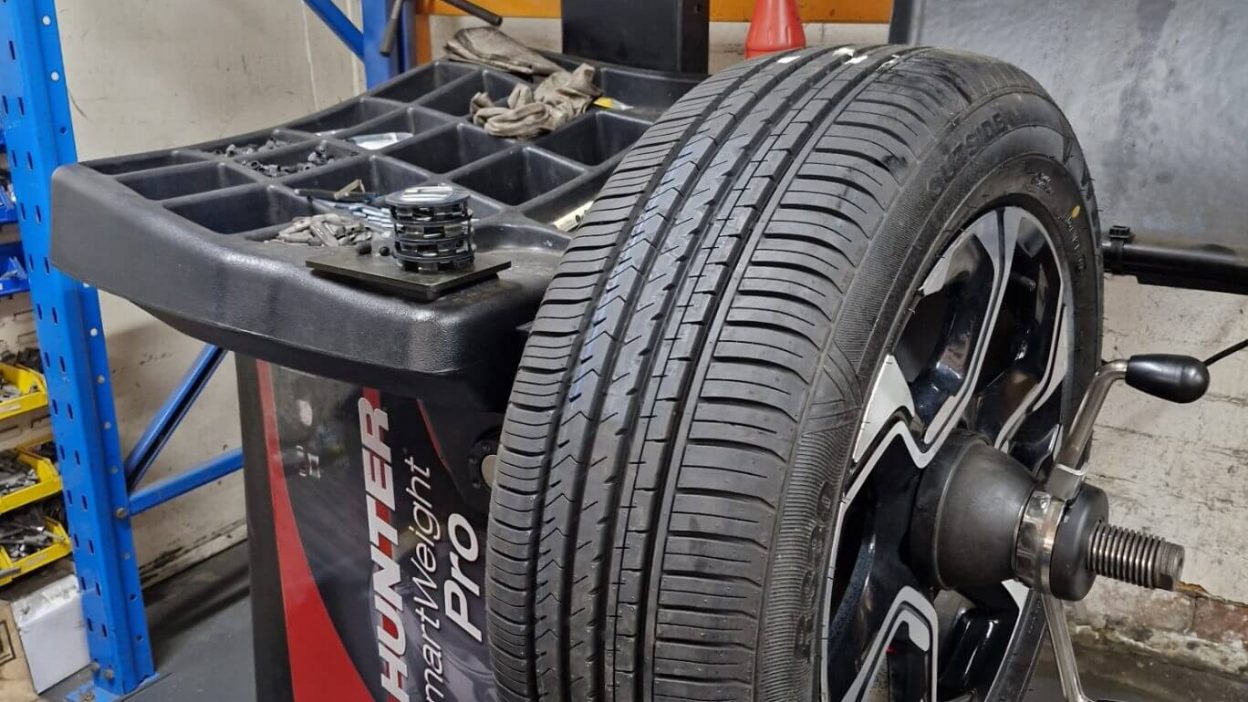
- Ensures weight is evenly distributed around each wheel
- Poor balancing causes steering vibration and uneven tyre wear
- Get balancing done every 10,000 km or when you feel steering vibration
6. Choose the Right Tyre Type for Indian Road Conditions
India’s diverse road conditions — from smooth highways to pothole-filled city roads and monsoon-soaked streets — demand the right tyre type for maximum safety and performance.
Car tyre types explained:
| Tyre Type | Best For |
|---|---|
| All-Season Tyres | Everyday city and highway driving |
| Performance Tyres | Sports and performance cars |
| SUV / 4×4 Tyres | Off-road and rough terrain |
| Run-Flat Tyres | Cars without spare tyres |
| Eco Tyres | Fuel efficiency focused driving |
For most Indian car owners, all-season radial tyres from trusted brands like MRF, Apollo, CEAT, Bridgestone, or Michelin offer the best balance of safety, durability, and value.
Book Tyre Service at a Verified Garage with Autodots
Whether you need tyre replacement, rotation, alignment, or balancing — Autodots connects you with verified garages near you that specialise in complete tyre services.
With Autodots you get:
- Verified garages near you — quality checked and customer reviewed
- Transparent upfront quotes — tyre price + fitting charges included
- Live service tracking — follow every step from your phone
- Digital service record — complete tyre history saved automatically
- Genuine tyres guaranteed — no fake or substandard products
Book your tyre service today at autodots.io
Quick Car Tyre Maintenance Checklist
| Task | Frequency | Why |
|---|---|---|
| Check tyre pressure | Every week | Safety and fuel efficiency |
| Visual tyre inspection | Every month | Catch damage early |
| Tyre rotation | Every 10,000 km | Even wear, longer life |
| Wheel balancing | Every 10,000 km | Smooth ride, no vibration |
| Wheel alignment | Every 15,000 km | Straight driving, even wear |
| Full tyre replacement | Every 40,000–60,000 km | Safety |
Final Thoughts
Your tyres connect your car to the road — and your safety to the ground beneath you. Follow this Best Car Tyres Guide, maintain your tyres regularly, and always choose the right tyre for your car and road conditions.