Managing vehicle repairs becomes difficult when job cards are handled only with paper forms, notebooks, or separate files. A garage may have several vehicles under repair at the same time, and each vehicle can have different customer complaints, inspection results, repair tasks, spare parts, technician notes, and billing details. If this information is not organized properly, service advisors and technicians may spend extra time checking records or asking for updates.
Garage Software for Managing Job Cards can help workshops organize repair information in one place. A digital job card can make it easier to track what work needs to be done, what has already been completed, which parts are required, and whether the vehicle is ready for delivery.
The main goal is simple: reduce unnecessary manual work, improve communication, and make the repair process easier to follow. In this guide, we will discuss six practical ways job card software can help a garage work better.
Table of Contents
Why Job Cards Are Important for Garages
A job card acts as a record of the repair work being performed on a vehicle. It can contain customer information, vehicle details, complaints, inspection findings, recommended work, technician notes, spare parts, labor, and job status.
When job cards are managed properly, everyone involved in the repair can understand what needs to happen next. The service advisor can communicate with the customer, while technicians can focus on the repair tasks.
Garage Software for Managing Job Cards makes this process more organized by keeping important repair information available digitally. This can reduce the need to search through paper files or separate records.

6 Ways to Work Better With Digital Job Cards
1. Create Job Cards Faster
Creating a job card manually can take time, especially when the same customer or vehicle has visited the garage before. Employees may need to write the customer’s details, vehicle information, service requirements, and other basic information again.
A digital system can make this process faster by keeping customer and vehicle records available. Service advisors can select existing information and then add the details of the current repair.
Garage Software for Managing Job Cards can help reduce repeated data entry and make it easier for service advisors to create a new repair record when a vehicle arrives.
2. Keep Customer Complaints Clearly Recorded
The customer’s complaint is an important part of the job card. It tells the technician what the vehicle owner has noticed and what they expect the workshop to check.
Instead of relying only on verbal communication, service advisors can record the complaint directly in the job card. This gives the technician a clear reference while inspecting the vehicle.
Clear complaint records can also help prevent misunderstandings. If the customer mentions multiple issues, each concern can be recorded separately so the technician knows what needs attention.
3. Connect Inspections With the Job Card
An inspection can reveal problems that were not included in the original customer complaint. The technician may find worn tyres, brake issues, fluid leaks, battery problems, or other conditions that require attention.
These findings should be connected with the vehicle’s job card so the service advisor can review them and discuss any additional work with the customer.

A digital workflow can make this process easier. Garage Software for Managing Job Cards can help keep inspection findings, photos, notes, and recommendations connected with the correct repair job.
4. Track Repair Progress
When a garage handles multiple vehicles, it can be difficult to remember the status of every job. A vehicle may be waiting for inspection, approval, spare parts, repair work, testing, or final delivery.
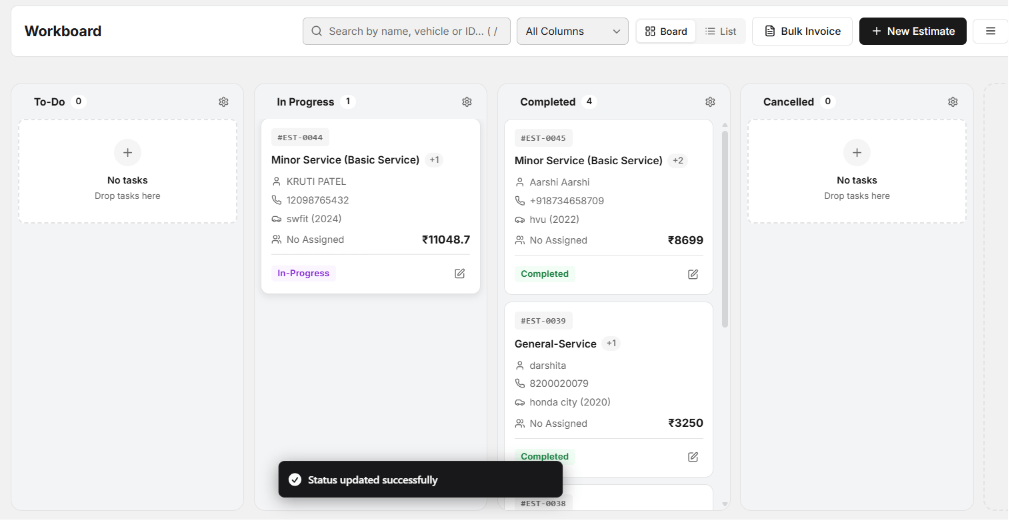
Digital job statuses can help employees understand where each vehicle is in the repair process. Simple statuses such as pending, inspection, waiting for approval, in repair, quality check, and ready for delivery can make the workflow easier to follow.
Garage Software for Managing Job Cards can provide a central view of job progress so service advisors and managers can quickly check the current status of a vehicle.
5. Manage Spare Parts With the Job
Many repairs require spare parts, and parts information should be connected with the job card. The team needs to know which parts are required, which parts are available, and which items have already been used.
When parts are managed separately from the repair job, employees may need to enter the same information more than once. This can increase the possibility of mistakes.
A connected digital system can make it easier to add parts to the job and include the same information during billing. It can also help the workshop maintain more accurate stock records.
6. Make Final Billing Easier
The job card contains much of the information needed for the final invoice. Services performed, labor charges, spare parts, quantities, and other charges can be reviewed before the vehicle is delivered.
When billing is connected with the job card, service advisors do not need to collect the same information from multiple sources. This can make invoice preparation faster and reduce missing items.
Garage Software for Managing Job Cards can help create a connected process from repair planning to final billing, making vehicle delivery smoother for both the garage and the customer.
How Digital Job Cards Save Time
Paper job cards require employees to write information manually and physically move documents between different stages of the repair. When several vehicles are being serviced, this can create unnecessary work.
Digital job cards allow information to be updated from the same system. A service advisor can create the job, a technician can add findings, and the billing team can use the completed information when preparing the invoice.
This reduces repeated data entry and can make the overall repair process more efficient.
Improve Communication Between Technicians and Service Advisors
Good internal communication is important when a garage is handling many repairs. Service advisors need to know what technicians have found and whether additional work is required.
If information is shared only through verbal messages, important details can sometimes be forgotten. A digital job card gives the team a shared reference.
Technicians can add notes about inspection findings and repair progress, while service advisors can review the information before communicating with customers. This creates a more organized workflow.
Keep Customers Better Informed
Customers usually want updates when their vehicle is under repair. They may want to know whether the inspection is complete, whether extra repairs are needed, when parts will arrive, or when the vehicle will be ready.
When job information is updated properly, service advisors can provide more accurate answers. They do not always need to ask technicians for the latest information before speaking with the customer.
Better information can lead to better communication and reduce unnecessary calls to the workshop.
Keep a Complete Vehicle Service History
A job card can become part of the vehicle’s long-term service history. When a customer returns to the garage, previous job information can help the team understand what was repaired earlier.
For example, service advisors can review previous complaints, replaced parts, inspection results, and recommendations. This can help technicians understand recurring issues and make future service conversations more useful.
A digital history also makes it easier to find older information compared with searching through physical files.
Benefits of Better Job Card Management
- Faster job card creation
- Better customer and vehicle records
- Clearer repair instructions
- Improved inspection tracking
- Better technician communication
- Easier spare parts management
- Faster billing
- Less paperwork
- Better repair status tracking
- More organized service history
These benefits can help garages improve their daily workflow without adding unnecessary complexity to the repair process.
Make Job Cards Simple for Technicians
A job card should provide useful information without becoming difficult to use. Technicians should be able to quickly understand the customer’s complaint, inspection requirements, assigned work, and important notes.
Use clear labels and simple fields wherever possible. If a technician has to enter long information for every small task, the system may slow down the workflow instead of improving it.
The best digital process is one that gives technicians the information they need while allowing them to update the repair status quickly.
Connect Job Cards With Inventory and Billing
A job card is not an isolated document. It is connected to several other workshop activities. When a repair requires parts, the inventory should reflect their usage. When the repair is completed, the same information may be required for billing.
Connecting these processes can reduce repeated work. Employees can use information already recorded in the job instead of entering the same data again.
Garage Software for Managing Job Cards can help create this connected workflow and make it easier for workshops to manage repairs from vehicle check-in to final delivery.
How AutoDots Can Help Modern Garages
AutoDots provides digital solutions designed to help automotive businesses organize important workshop activities. Modern workshop tools can help teams manage customer information, vehicle records, appointments, job cards, inspections, spare parts, billing, and other daily operations.
Garage Software for Managing Job Cards can be useful for garages that want to move away from paper-based repair tracking and create a more organized digital workflow.
If you are interested in automotive technology and business opportunities, you can explore the AutoDots partner program to learn more.
For more automotive business guides, workshop tips, and practical information, visit the AutoDots blog.
Simple Tips for Better Job Card Management
Start by creating a standard job card process for every vehicle. Record the customer’s complaint, vehicle information, inspection findings, required work, parts, and job status.
Make sure technicians and service advisors follow the same process. Consistent information makes it easier for everyone to understand what is happening with each vehicle.
Review job cards before closing a repair. Check whether all services are completed, parts are recorded, technician notes are available, and the final invoice contains the correct information.
Finally, keep completed job cards as part of the vehicle history. Previous repair information can become valuable when the customer returns in the future.
Common Job Card Mistakes to Avoid
One common mistake is creating incomplete job cards. Missing customer complaints or vehicle details can create confusion for technicians.
Another mistake is not updating the repair status. If the job card still shows an old status, service advisors may give customers incorrect information.
Garages should also avoid keeping parts information separate from the repair job when possible. Connecting parts with the correct vehicle helps improve both inventory and billing accuracy.
Finally, avoid closing a job without reviewing the information. A quick final check can help identify missing services, parts, notes, or charges before the vehicle is delivered.
Frequently Asked Questions
What is Garage Software for Managing Job Cards?
Garage Software for Managing Job Cards is a digital solution that helps workshops create, organize, update, and track job cards throughout the vehicle repair process.
How can Garage Software for Managing Job Cards improve workshop efficiency?
Garage Software for Managing Job Cards can reduce paperwork, organize repair information, track job progress, connect inspections and spare parts, improve communication, and make final billing easier.
Can digital job cards replace paper job cards?
Yes. A digital job card can store the same important repair information while making it easier to update, search, share, and connect with other workshop activities.
Can technicians update digital job cards?
Yes. Technicians can use digital job cards to record inspection findings, repair notes, parts used, and job progress, depending on the features available in the workshop system.
Why should job cards be connected with billing?
Connecting job cards with billing can reduce repeated data entry and make it easier to transfer completed services, labor, and parts information into the final invoice.
Conclusion
Job cards are an important part of every vehicle repair process. When they are managed manually, garages may face problems such as lost paperwork, incomplete information, slow updates, repeated data entry, and communication gaps.
Garage Software for Managing Job Cards can help solve these problems by organizing customer complaints, vehicle details, inspections, repair tasks, spare parts, job progress, and billing information in a connected workflow.
The goal is not simply to replace paper with a digital screen. The goal is to make the entire repair process easier to follow. With better job card management, garages can save time, improve communication between teams, provide clearer customer updates, and create a more organized service experience.