Tesla Cybercab 2026 — Everything You Need to Know About the $30,000 Autonomous Robotaxi
The future of transportation just became real.
Tesla Cybercab 2026 — the world’s first mass-produced, fully autonomous robotaxi — has officially entered production at Gigafactory Texas in April 2026. No steering wheel. No pedals. No driver needed.
If you’ve been following the EV space, you already know this moment has been years in the making. But now it’s actually happening — and the implications for drivers, garage owners, and the entire automotive industry are massive.
Here’s everything you need to know.
Table of Contents
What Is the Tesla Cybercab 2026?
The Tesla Cybercab 2026 is a two-passenger battery-electric self-driving car developed by Tesla. The vehicle is planned to be fully autonomous, with prototype vehicles having no steering wheel or pedals.
It’s not just a car. It’s Tesla’s bet on the future of transportation — a vehicle designed from the ground up to operate without a human driver, built to run as part of Tesla’s robotaxi network.
Key Specs
| Feature | Detail |
|---|---|
| Seating | 2 passengers |
| Range | 200 miles (320 km) |
| Battery | 35 kWh |
| Efficiency | 5.5 miles/kWh |
| Charging | Wireless inductive (90%+ efficiency) |
| Autonomy | Level 4/5 — no steering wheel or pedals |
| Price | Under $30,000 |
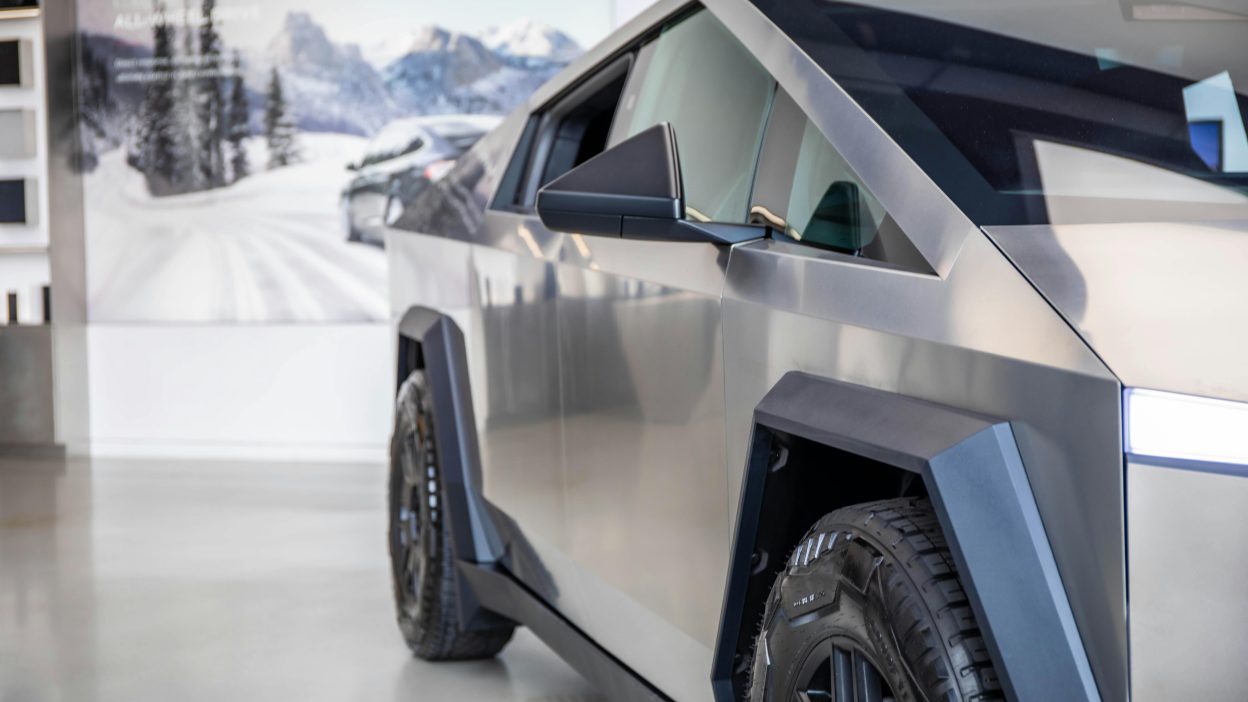
| Doors | Two butterfly doors, no door handles |
Production Timeline
In February 2026, Tesla announced the first Tesla Cybercab 2026 production vehicle had been produced at the Gigafactory Texas.
April 2026 marks the beginning of initial production — a low volume validation phase — with production expected to ramp up in Q3-Q4 2026 as manufacturing processes are refined.
Elon Musk himself has warned that the initial rollout will be “agonizingly slow” as new technologies are validated and debugged. So don’t expect to hail a Cybercab outside your door just yet.
The Revolutionary Manufacturing Process
One of the most impressive things about the Cybercab isn’t the vehicle itself — it’s how Tesla plans to build it.
Tesla’s CEO Elon Musk stated that manufacturing for the Tesla Cybercab 2026 is closer to a high-volume consumer electronics device than a traditional car manufacturing line, with a target cycle time of less than ten seconds per unit.
Tesla’s next-generation Giga Press technology is reportedly capable of casting the entire underbody in a fraction of the time traditional methods require, enabling a target production rate of hundreds of units per week right from the start.
Price — The Most Affordable Tesla Ever
The under-$30,000 price point positions the Cybercab as Tesla’s most affordable vehicle, undercutting even the Model 3 and Model Y. This aggressive pricing strategy assumes significant cost savings from the vehicle’s streamlined design — no steering wheel, no pedals, no traditional control systems, and wireless inductive charging instead of a charge port.
For context, this makes the Cybercab one of the most affordable fully autonomous vehicles ever announced.
Who Can Buy One?
While the initial run of April 2026 Cybercabs is earmarked for Tesla’s internal, corporate-owned ride-hailing fleet competing directly with Uber and Waymo, Elon Musk confirmed that a consumer-purchasable version will hit the market in 2027.
So if you want to own one personally, you’ll likely need to wait until 2027 — but you may be able to ride in one much sooner.
Where Will It Be Available First?
Tesla plans to launch the public beta of its ride-hailing app in select, regulation-friendly US cities — likely Austin and Las Vegas — by late Q3 or early Q4 of 2026. Users will be able to summon a Cybercab just as they would an Uber or Lyft.
For UK drivers, the timeline is longer. European regulatory approval for Tesla’s FSD system is required before any commercial deployment.
The Regulatory Challenge
Here’s the elephant in the room — and it’s a big one.
The regulatory layer could significantly impact where and when Cybercabs actually operate at scale. A vehicle without steering wheels or pedals requires explicit exemptions from federal motor vehicle safety standards in the US and similar approvals globally.
Tesla has not yet publicly disclosed which international jurisdictions have granted these exemptions. This is the single biggest risk to the Cybercab’s timeline.
What Does This Mean for the Auto Industry?
The Cybercab isn’t just another EV. It represents a fundamental shift in how we think about car ownership.
If Tesla’s robotaxi network scales as planned, the Cybercab could:
→ Reduce the need for personal car ownership in cities → Compete directly with Uber, Lyft, and traditional taxi services → Change how insurance works — Tesla assumes liability for fleet vehicles → Create a passive income opportunity for individual Cybercab owners who add their vehicle to Tesla’s network
Cybercab vs. Competitors
| Tesla Cybercab | Waymo | Cruise (GM) | |
|---|---|---|---|
| Price | ~$30,000 | Fleet only | Fleet only |
| Autonomy | Level 4/5 | Level 4 | Level 4 |
| Technology | Camera-only FSD | Camera + LiDAR | Camera + LiDAR |
| Consumer Purchase | Yes (2027) | No | No |
| Wireless Charging | Yes | No | No |
Tesla’s camera-only approach — no LiDAR — is the most controversial aspect of its autonomous system. Critics argue it’s riskier. Tesla argues it’s more scalable and cost-effective.
Should You Be Excited?
For drivers and EV enthusiasts in the USA and UK — yes, absolutely.
The Cybercab represents the most affordable entry point into autonomous vehicle technology ever announced. At under $30,000, it’s accessible to everyday consumers — not just wealthy early adopters.
The key questions that remain:
- Will regulatory approval come fast enough?
- Will Tesla’s camera-only FSD prove safe enough at scale?
- Will the production ramp meet Musk’s ambitious targets?
History suggests Tesla’s timelines should be taken with caution. But the hardware is real, the production has started, and the direction is clear.
April 2026 is just the beginning.
Key Takeaways
✅ Production started at Gigafactory Texas — April 2026
✅ Price: Under $30,000 — most affordable Tesla ever
✅ No steering wheel, no pedals — fully autonomous
✅ Wireless inductive charging — no charge port needed
✅ Consumer sales expected: 2027
✅ First robotaxi service: Austin & Las Vegas, late 2026
⚠️ Regulatory approval still required for wider deployment
⚠️ Initial production will be limited — “agonizingly slow”
Interested in how EV technology is changing the auto repair and garage industry? Explore more at BLOG
Read more :
How Trump Tariffs Are Pushing Up Used Car Prices in 2026 — What It Means for Garage Owners
How to Set Your Auto Shop Labor Rate in 2026 — Complete Pricing Guide
Auto Parts Tariffs 2026 — How Rising Parts Costs Are Hitting Garages and What to Do