
Billing is an important part of every automotive workshop. A repair job may begin with a customer complaint, move to inspection and repair, and finally end with an invoice and payment. When these steps are handled manually, workshop staff may spend a lot of time writing details, checking calculations, and searching for old records.
Automotive Invoice Software can make this process easier by helping workshops manage invoices, services, spare parts, labor charges, taxes, discounts, and payments in a more organized way. It can also connect billing with customer, vehicle, and repair information.
For a busy garage, simple billing is not just about saving time. It also helps customers understand what they are paying for. In this guide, we will look at eight smart and practical ways to make workshop billing easier with a digital process.
Table of Contents
Why Easy Billing Matters for Automotive Workshops
Imagine a customer brings a car for a regular service. The technician checks the vehicle and finds that the brake pads also need replacement. The workshop now needs to add the parts, labor, and service charges, explain the extra work to the customer, and prepare the final bill.
If all of this is done on paper or through different files, mistakes can easily happen. A part may be missed, a price may be entered incorrectly, or the final invoice may take too long to prepare.
Automotive Invoice Software can help bring these details into one organized process. This makes it easier for the service advisor to prepare accurate bills and keep customer records updated.
8 Smart Ways to Simplify Automotive Invoice Software
1. Create Invoices From Repair Details
A good billing process should start with the repair job. When a vehicle arrives, the workshop can record the customer complaint, vehicle details, requested service, inspection results, parts, and labor.
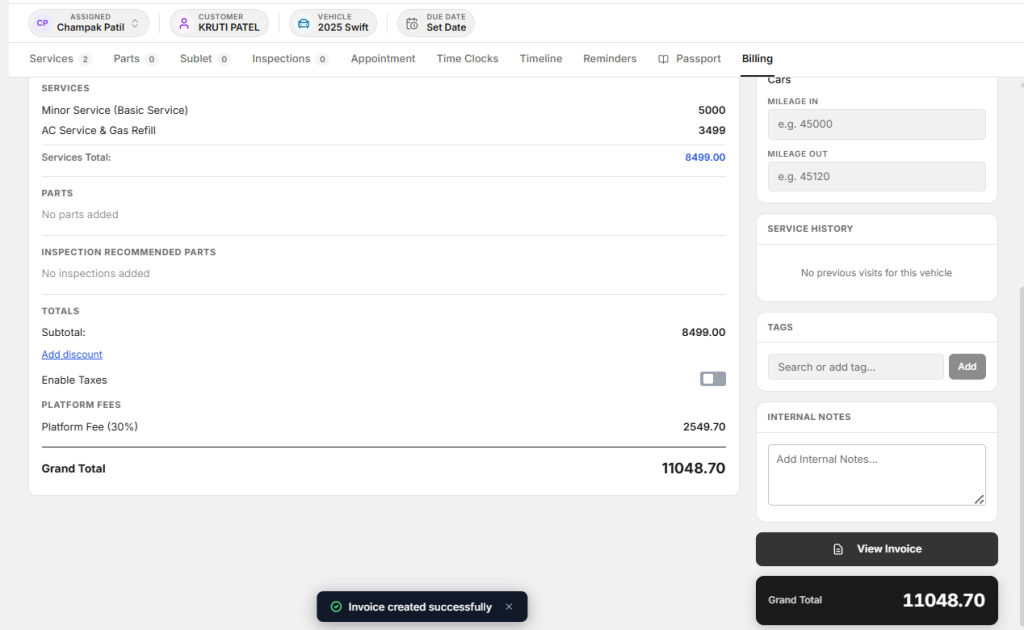
Once the repair is complete, these details can be used to prepare the invoice. This means the service advisor does not have to enter the same information again.
With Automotive Invoice Software, workshops can keep repair and billing information connected. This can save time and reduce the chance of missing a service or spare part on the final bill.
It also makes the billing process easier for employees because they can work from information that has already been recorded.
2. Keep Parts and Labor Clear
Customers want to know what they are paying for. A clear invoice should show the services completed, spare parts used, labor charges, taxes, discounts, and final amount.
For example, if a customer gets brake service, the invoice can show the brake parts separately from the labor charge. This makes the bill easier to understand.
Automotive Invoice Software can help organize these charges into clear invoice items. The workshop can enter the correct part and service details and use them when creating the final bill.
Clear billing can also reduce questions from customers and create more trust between the workshop and vehicle owner.
3. Reduce Manual Calculations
Manual calculations can take time, especially when an invoice contains many parts and services. Adding labor charges, taxes, discounts, and other costs by hand can also increase the chance of mistakes.
Digital invoicing can handle many of these calculations automatically based on the information entered by the workshop.
This is one area where Automotive Invoice Software can make a real difference. Employees can focus more on checking the invoice details instead of spending time doing every calculation manually.
Before sending an invoice to a customer, the service advisor should still review the details to make sure the charges are correct.
4. Connect Estimates With Final Invoices
Many repairs start with an estimate. The workshop checks the vehicle, prepares a list of recommended work, and gives the customer an expected cost.

Once the customer approves the work, the technician can complete the repair. After the repair, the final invoice should reflect the actual work and parts used.
A connected digital process can make this easier. Instead of creating a completely new invoice, the workshop can use the approved estimate as a starting point and update it with the final repair details.
Automotive Invoice Software can help keep the estimate and invoice information organized, making it easier to see what was approved and what was finally completed.
5. Record Payments Properly
Creating an invoice is only one part of workshop billing. The payment also needs to be recorded correctly.

Customers may pay by cash, card, bank transfer, or another payment method accepted by the workshop. The team should record the payment against the correct invoice.
This helps the workshop understand which bills have been paid and which payments are still pending.
Using Automotive Invoice Software can help keep invoice and payment records together. This can make it easier for the owner or manager to review outstanding payments and daily collections.
6. Keep Customer and Vehicle Information Connected
Customers often return to the same workshop for future services. Their previous invoices can be useful when they come back.
For example, a service advisor may want to check when the customer’s last service was completed, which parts were replaced, or what repairs were previously performed.
When customer, vehicle, repair, and invoice records are connected, employees can find this information more easily.
Automotive Invoice Software can support a connected record where billing information stays linked with the customer and vehicle. This can make future service visits smoother and reduce the need to create the same customer information again.
7. Make Invoices Easy to Share
Customers may want to receive their invoice digitally after the repair. A digital invoice can be easier to store and access than a paper bill.
A workshop can share invoice information through the available digital communication options supported by its system. This can help customers keep a record of the repair and payment.
For the workshop, digital invoices can also make record keeping easier. Employees can search for previous bills without looking through physical files.
Automotive Invoice Software can help workshops create organized digital invoices and maintain better billing records.
8. Review Billing Data to Improve the Workshop
Invoices contain useful information about workshop activity. Owners can review the number of completed jobs, common services, parts used, total billing, discounts, and pending payments.
This information can help the workshop understand where its business is coming from and where improvements may be needed.
For example, if a workshop sees that a particular service is requested frequently, it can make sure the required parts and technicians are available. If many invoices remain unpaid, the owner can improve the payment follow-up process.
Automotive Invoice Software can help organize this billing information so workshop owners can make better decisions using actual business records.
Build a Simple Repair-to-Payment Workflow
One of the easiest ways to improve billing is to create a clear workflow. A simple process can look like this:
- Customer Check-In: Record customer and vehicle information.
- Job Card: Add the customer complaint, inspection details, and required work.
- Estimate: Prepare the expected repair cost and get customer approval.
- Repair: Complete the approved work and record parts and labor.
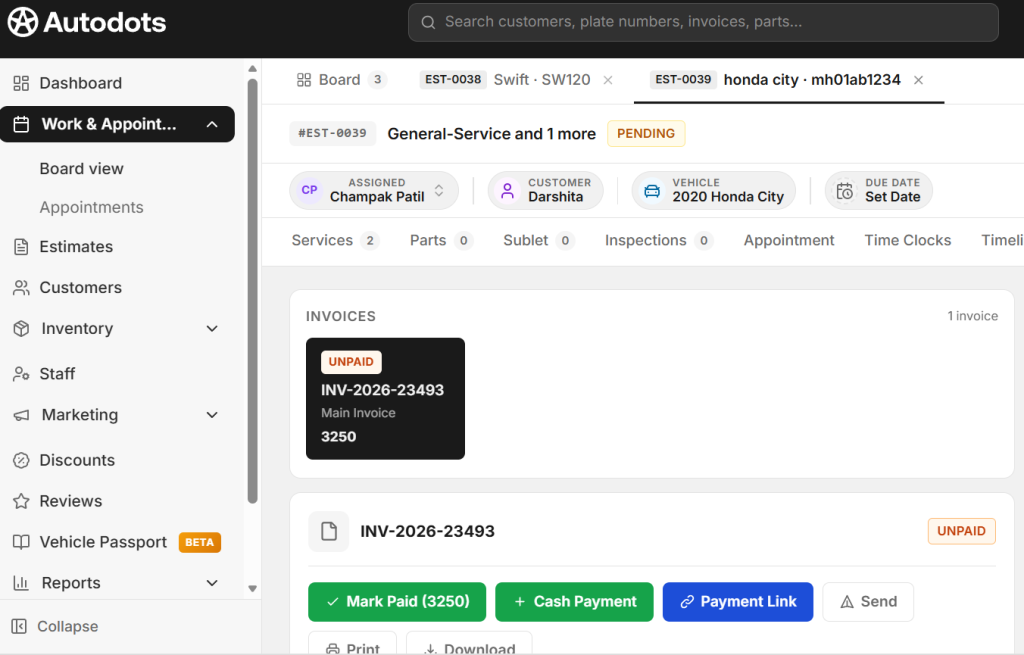
- Invoice: Create the final bill using the actual repair information.
- Payment: Record the amount received and payment method.
- Vehicle Delivery: Complete the handover and keep the service record.
When these steps are connected, the workshop does not need to manage billing as a separate activity. The invoice becomes a natural part of the repair process.
How Better Billing Improves Customer Experience
Customers usually want three simple things from a workshop: clear information, fair pricing, and a smooth service experience.
A clear invoice helps with all three. Customers can see which services were completed, which parts were used, and what amount they need to pay.
When the workshop can quickly find previous records, it can also answer customer questions more easily. This can make the overall experience feel more professional.
Good billing is therefore not only an accounting task. It is also an important part of customer service.
Benefits of Digital Workshop Billing
- Faster invoice creation
- Less manual data entry
- Fewer calculation mistakes
- Clear parts and labor charges
- Better estimate tracking
- Easy payment records
- Organized customer billing history
- Easy access to vehicle records
- Less paperwork
- Better workshop organization
How AutoDots Can Help Your Workshop
AutoDots provides digital tools designed for automotive businesses and workshops. The platform can help manage areas such as customers, vehicles, appointments, job cards, inspections, spare parts, estimates, invoices, payments, and other daily workshop activities.
Automotive Invoice Software can help connect the repair and billing process so workshop teams can move from job details to estimates, final invoices, and payment records in a more organized way.
Keeping these activities connected can reduce repeated data entry and make it easier to find important records when a customer returns for another service.
If you are interested in working with AutoDots, you can learn more through the AutoDots partner program.
For more practical guides about workshop management, automotive technology, and running a better garage, visit the AutoDots blog.
Tips for Making Your Workshop Billing Better
Start by checking your current billing process. See how much time your team spends creating estimates, preparing invoices, calculating charges, and recording payments.
Next, identify where the same information is entered multiple times. Customer details, vehicle information, parts, and labor should ideally move through the workflow without unnecessary re-entry.
Make your invoices simple and easy to read. Avoid confusing descriptions and make sure customers can clearly see the services, parts, labor, taxes, discounts, and final amount.
Finally, review your billing records regularly. Look for unpaid invoices, common services, frequent parts, and other useful information that can help you manage the workshop better.
Common Billing Mistakes to Avoid
One common mistake is preparing invoices without checking the completed repair work. Always compare the final bill with the actual services and parts used.
Another mistake is not getting approval for additional repairs. If the technician finds another issue, explain the repair and expected cost to the customer before adding the work.
Workshops should also avoid keeping payment information separate from invoice records. A clear connection between the two makes it easier to know which bills are complete.
Finally, avoid using unclear descriptions on invoices. Simple language can help customers understand the bill and reduce unnecessary questions.
Frequently Asked Questions
What is Automotive Invoice Software?
Automotive Invoice Software is a digital tool that helps garages and auto repair workshops create, manage, and track invoices for vehicle services, spare parts, labor, taxes, discounts, and payments.
Can invoice software connect with repair jobs?
Yes. A connected workshop system can use information from job cards, services, spare parts, and labor when preparing invoices. This can reduce repeated data entry and make billing faster.
Can software help with repair estimates?
Yes. A digital workshop system can help create estimates before repair work begins. Approved repair details can then be used when preparing the final invoice.
How can digital invoicing reduce billing mistakes?
Digital invoicing can reduce manual calculations and repeated data entry. It can also keep customer, vehicle, repair, parts, and billing information organized in one workflow.
Can I keep previous customer invoices?
Yes. Digital records can help workshops maintain previous invoices and connect them with customer and vehicle information. This can make it easier to review service history during future visits.
Conclusion
Workshop billing becomes much easier when it is connected with the complete repair process. Instead of treating estimates, invoices, and payments as separate tasks, garages can manage them as part of one simple workflow.
Automotive Invoice Software can help workshops reduce manual work, organize parts and labor charges, connect estimates with final invoices, record payments, and maintain useful customer and vehicle billing history.
The goal is not simply to create invoices faster. It is to create a clear process that starts with the repair job and ends with a correct invoice and recorded payment. With the right digital workflow, your workshop can save time, reduce billing confusion, and provide customers with a better service experience.