
Many workshop owners focus on increasing revenue when looking for ways to grow their business. However, reducing unnecessary expenses can be just as valuable. One of the most overlooked opportunities is eliminating paper-based processes. From job cards and invoices to customer records and service histories, paperwork consumes time, money, and valuable resources. This is why more workshops are exploring paperless workshop savings as part of their digital transformation strategy.
Going paperless is not simply about reducing paper consumption. It is about creating faster workflows, improving organization, reducing errors, and increasing profitability. When workshops calculate the true cost of manual processes, the long-term benefits of paperless workshop savings become clear.
Table of Contents
What Does a Paperless Workshop Look Like?
A paperless workshop uses digital systems to manage daily operations instead of relying on physical documents. Information is stored electronically and can be accessed quickly by authorized staff members.
Examples include:
- Digital job cards
- Electronic invoices
- Digital customer records
- Online appointment scheduling
- Digital inspection reports
- Cloud-based service histories
By replacing manual paperwork with digital processes, workshops can unlock significant paperless workshop savings across multiple areas of the business.
Hidden Costs of Paper-Based Processes
Many workshop owners underestimate how much paperwork actually costs. While paper itself may seem inexpensive, the associated administrative workload creates ongoing expenses.
Printing Costs
Paper, ink, printers, maintenance, and replacement supplies all contribute to operational costs over time.
Storage Requirements
Physical records require filing systems, storage cabinets, and dedicated space that could be used more productively.
Time Loss
Searching for documents, updating records, and managing paperwork consumes valuable employee time.
Reducing these inefficiencies is one of the primary drivers of paperless workshop savings.
How Going Digital Improves Profitability
1. Reduce Administrative Work
Manual paperwork often requires repeated data entry and document handling. Digital systems automate many of these tasks, allowing employees to focus on higher-value activities.
For many workshops, administrative efficiency becomes one of the largest sources of paperless workshop savings.
2. Improve Workflow Efficiency
Digital records are easier to access, update, and share. Employees spend less time searching for information and more time serving customers.
Improved workflow management contributes directly to long-term paperless workshop savings.
3. Reduce Human Errors
Paper-based processes increase the risk of misplaced records, incomplete forms, and data entry mistakes.
Digital systems help standardize information management and reduce costly administrative errors.
4. Improve Customer Experience
Customers appreciate faster communication, organized service records, and professional documentation. Better customer experiences often lead to stronger retention and repeat business.
These customer-related benefits further increase the value of paperless workshop savings.
Where Workshops Typically Save Money
The financial impact of digital transformation often comes from multiple small improvements that add up over time.
- Reduced paper and printing expenses
- Lower document storage costs
- Faster invoice processing
- Improved staff productivity
- Reduced administrative workload
- Better workflow visibility
- Improved customer retention
Collectively, these advantages create measurable paperless workshop savings that contribute to overall profitability.
The ROI of Going Digital
Return on investment is not limited to direct cost reductions. Workshops often experience operational improvements that generate additional business value.
Benefits may include:
- More efficient daily operations
- Faster customer service
- Improved technician productivity
- Better business reporting
- Stronger customer relationships
- Increased scalability
When these factors are considered together, the ROI associated with paperless workshop savings can be substantial.
How Autodots Helps Workshops Go Paperless
Autodots helps workshops modernize operations through digital tools designed specifically for garage management.
Features such as digital job cards, customer management, invoicing, workflow tracking, service histories, and reporting help support ongoing paperless workshop savings while improving operational visibility.
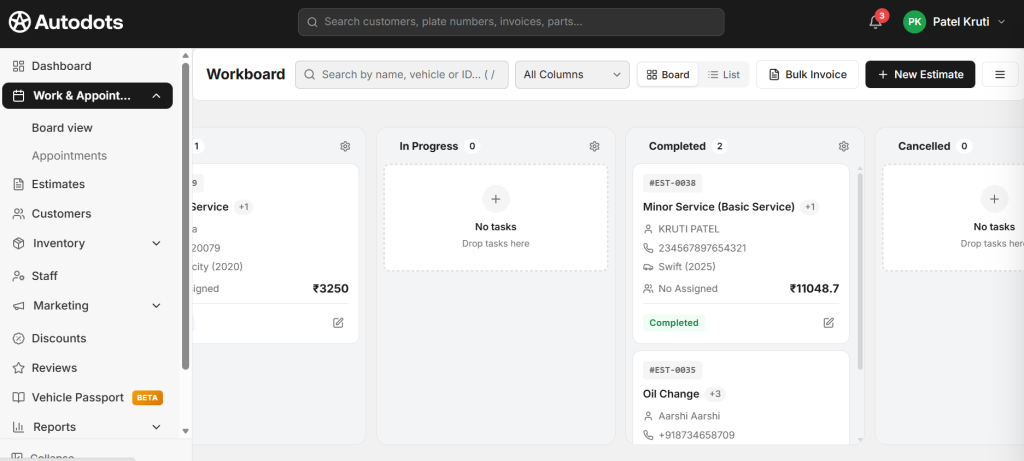
By centralizing workshop information and reducing reliance on paper-based processes, businesses can operate more efficiently and professionally.
You can also explore additional garage management insights on the Autodots Blog.
Common Concerns About Going Paperless
Will It Be Difficult to Learn?
Most modern workshop management platforms are designed to be user-friendly and easy to implement.
Is Digital Data Secure?
Properly managed digital systems often provide better security and backup capabilities than physical paperwork.
Will It Disrupt Daily Operations?
With proper planning, workshops can transition gradually while maintaining normal business activities.
Frequently Asked Questions (FAQs)
What are paperless workshop savings?
Paperless workshop savings refer to the cost reductions and efficiency improvements achieved by replacing paper-based processes with digital systems.
How does going paperless reduce costs?
It reduces spending on paper, printing, storage, administrative labor, and document management activities.
Can digital systems improve workshop productivity?
Yes. Digital workflows improve information access, reduce repetitive tasks, and streamline daily operations.
Do customers benefit from paperless processes?
Customers often receive faster communication, more organized records, and a more professional service experience.
How quickly can workshops see ROI from digital tools?
Many businesses begin experiencing operational improvements and cost savings within the first few months of implementation.
Why are more garages moving toward digital workflows?
Digital systems help improve efficiency, reduce costs, increase visibility, and support long-term business growth.
Conclusion
The decision to eliminate paperwork is about much more than reducing paper usage. By embracing digital workflows, workshops can improve efficiency, reduce administrative costs, enhance customer experiences, and unlock significant paperless workshop savings.
As the automotive industry continues to evolve, workshops that invest in digital transformation will be better positioned to improve profitability and remain competitive.
To reduce paperwork and modernize your operations, explore Autodots Garage Management Solutions and discover how digital tools can help your business grow.